
The problem, what got
built, what changed.

Four pieces of work. Real screens, not mockups.

Selling a quote as a product

MyDressboxProduct strategyCRCommercial

Problem

Getting a wedding dress cleaned meant carrying it round town. Three dry cleaners, three counters, three people looking at it and naming a different price. Nobody could buy without a conversation, and nobody could buy at all unless they lived near a cleaner who would touch bridal.

Built

Five fixed prices, $299 to $599, bought online like anything else. The box arrives at her door, the gown goes back in it, it comes home cleaned and boxed.

The point

The tier keys off the gown, not the dirt. Style, length, circumference, volume, detailing. That is what makes a price quotable from a photo instead of a counter, and it is what turned a local service into one that sells to the whole country.

The hard part was never the website. It was deciding what varies and what does not, then being willing to fix a price on a gown nobody has seen yet.
Dress|OS

MyDressboxSystemsTLTotal Leverage

Problem

Gowns moved through the laundry on a paper log. Nobody could say where a dress was without walking the floor. How long each stage took was written down nowhere. Several subscriptions were each doing part of the job and none of them talked to each other.

Method

Scoped the process that already existed, on the floor, with the people running it. Documented it as eleven stages. Built it. Connected the systems already being paid for, Shopify, AusPost, Supabase, Google. Cancelled what the build replaced.

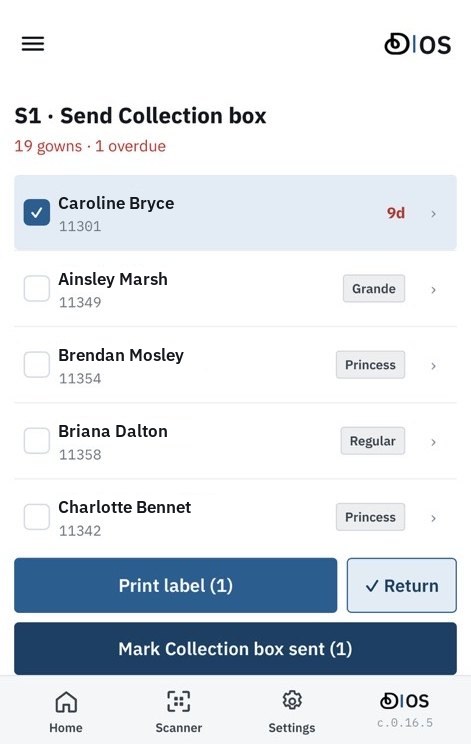
Dress OS on a phone: the Send Collection box queue with gowns tagged by tier, one selected, and buttons to print a label and mark the box sent
Stage one on the floor. Tier decides which box goes out. Tick the gowns going today, print the labels, mark them sent.
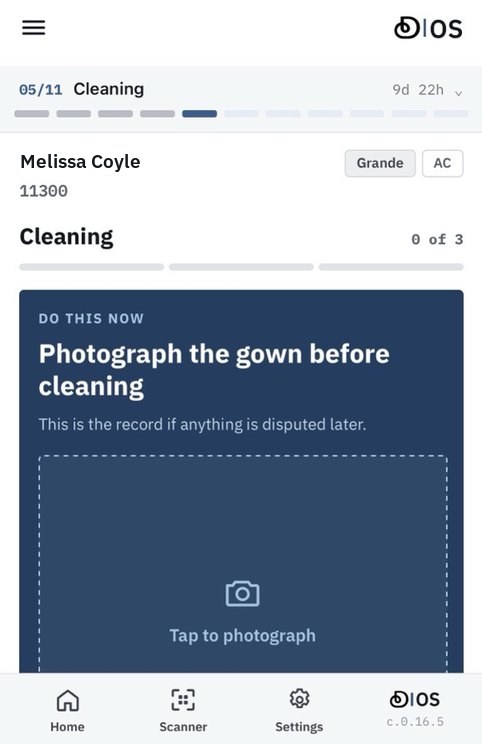
Dress OS on a phone: the cleaning stage telling the operator to photograph the gown before cleaning, with a tap to photograph area
Cleaning. One instruction at a time, in the order the work happens, with the reason attached.
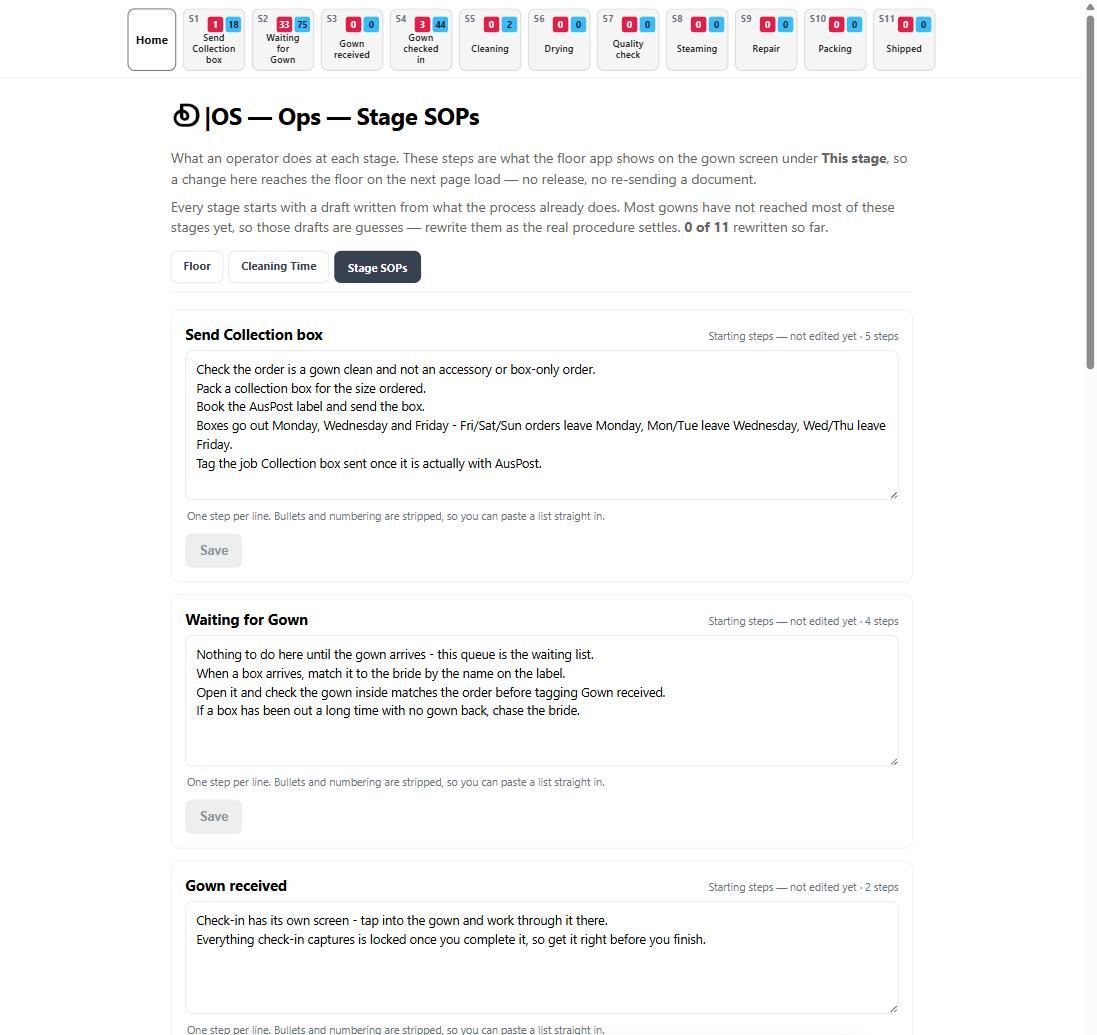
Dress OS ops screen for editing operator steps at each stage, with live gown counts across all eleven stages
The procedure lives in the app. Ops rewrites a stage and the floor sees it on the next page load. No release, nobody re-sending a document.

Result

The floor runs off phones. Queue counts are live across all eleven stages. Every stage with real work in it is timed, so there is finally an answer to what a gown costs in minutes.

The software is not the output. The measurements are. You cannot fix a process nobody has ever timed.

Cognito Crayons

Costing, brand, storefrontTLTotal Leverage

Problem

A crayon manufacturer with 64 recipes and no reliable idea what any of them cost to make. Pricing came off a spreadsheet several people had edited over several years. Ingredients, labour and overhead all sat apart, so nobody could answer the only question that matters. What does one crayon cost.

Built

A costing tool that holds ingredients at their real prices, labour rates by task, and overhead, then builds a recipe out of the three. Change an ingredient price and every recipe using it moves with it. Cost per crayon falls out the bottom, including setup, QC and reject rate.

Then the brand and the storefront on top of it, because knowing what something costs is only half of knowing what to charge.

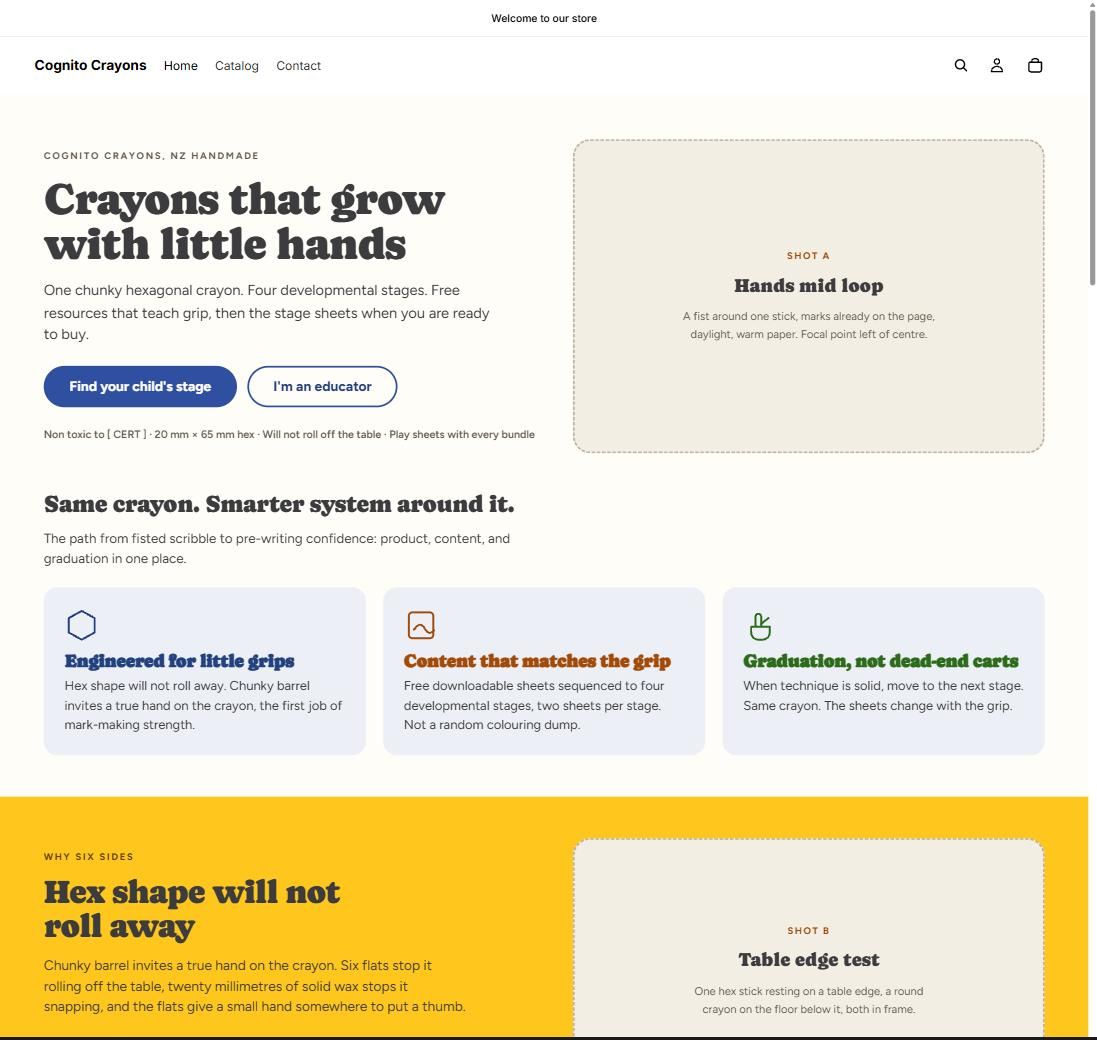
Cognito Crayons storefront home page, headlined Crayons that grow with little hands, with separate entry points for parents and educators
The storefront. Two ways in off the hero, one for a parent and one for an educator, because they are not the same sale.
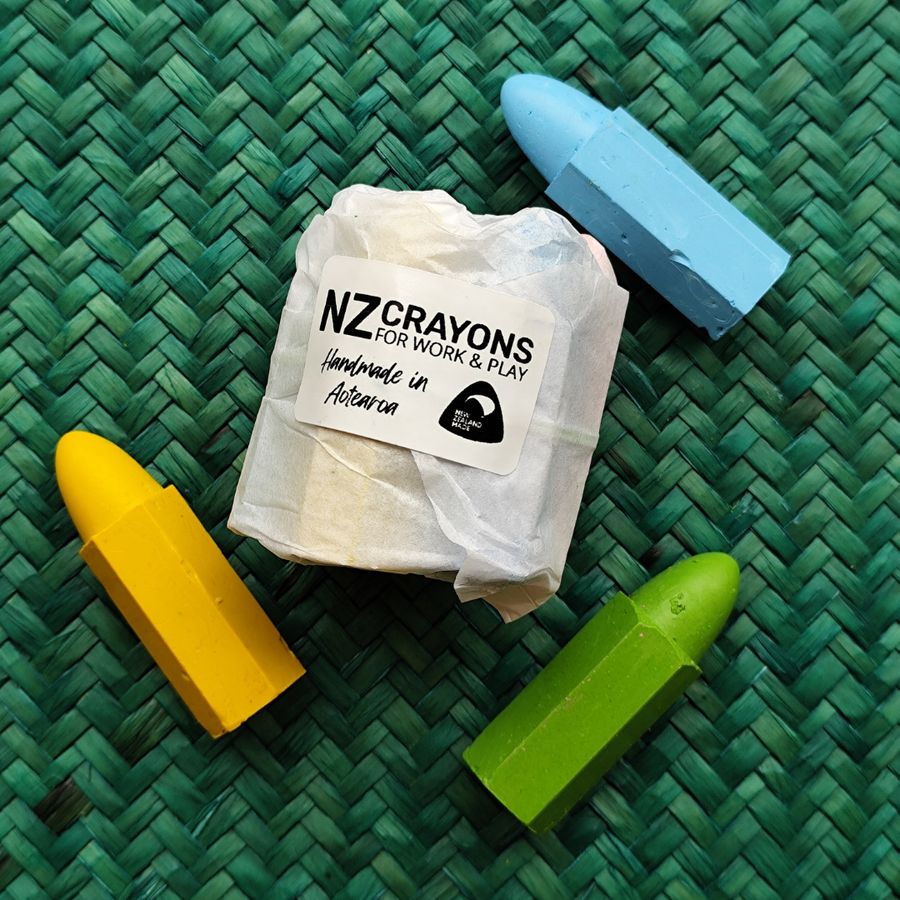
Three hexagonal crayons in yellow, blue and green beside a paper-wrapped block, on a woven flax mat
The product the brand has to carry. Six flats, twenty millimetres, hand poured.

Also

Brand and a Shopify storefront alongside it, built for two buyers with nothing in common. A parent arrives from social with ninety seconds and needs to believe the colour is strong and the stick survives a fist. A teacher needs something requisitionable: a price break, a printable programme, a GST invoice.

The sharpest call in the brand was a list of banned words. Natural, plant based, food grade, edible. The whole vocabulary the category reaches for by reflex, and every one of them invites a parent to think of a crayon as food. It is certified non toxic and boring enough that it will not stay in a mouth. A drawing tool, not a snack.

ListMe

Property tech, New ZealandGo to marketINInsight

Problem

An early stage venture going after residential property, a market where everybody complains about the commission model and almost nobody leaves it. The interesting question was never whether the idea was good. It was who would pay for it first, and why they would move when nothing else had made them.

Done

Market research, then the part that usually gets skipped: sitting down with agents. A proposition aimed at an industry is best pressure tested by the people inside it, because they can tell you precisely why the current way survives. That is worth more to a launch plan than any market size number.

Out of it, a go to market strategy. Who to sell to first, what to say to them, and what has to be true before spending money on acquisition. Plus the ordinary founder questions that have nothing to do with the product and decide whether it ships.

The point

Startup advice is mostly subtraction. A founder turns up with a list of things to do and the work is deciding which one is genuinely first, and which of the rest are not real yet.

Start with the diagnosis.

If the useful part above was the reasoning rather than the result, that is the part worth buying.

Book an Insight review